DreamVu — real-world data capture
360°Alia exo stream · unwrapped equirectangular16K
90°180°270°360°

Real-world data for training robot foundation models and world models.

DreamVu is an applied research company. We built the camera, we publish the research, and we run the operation that captures real work in real places.

( 00 ) QualityBuilt to frontier-lab specification.Full numeric specification under NDA
G1
Calibration
Verified per rig, per session.
G2
Alignment
All camera streams confirmed in sync before annotation starts.
G3
Annotation review
A person reviews every batch.
G4
Rejection
Batches that fall below the threshold are captured again.
( 01 )Library

What we deliver.

Every clip below was captured in a real working environment. Nothing is staged and nothing is synthetic.

Robot training data
Stocking and replenishment
360° exo view with depth
World model data
360° exo view with depth
Navigation dataset
Aisle traverse, full store loop
VLM dataset
Shelf state and restock reasoning
3D objects
Packaged goods

What you can get, from one capture system.

What we capture depends on what your model needs to learn. The camera configuration and the annotation change; the venue access, the operation, and the quality standard do not.

OutputCaptureFor
Robot training dataManipulation, VLM, and navigation datasets. Ego, exo, and wrist cameras as the dataset needs. Alia, or cameras you specify.Training VLA and VLM models
World model dataAlia 16K. A 360° stereo panorama with depth for every pixel.Training generative video and world models
Simulation assetsObjects scanned from real venues. USD with physics. Environments in development.Training robots in simulation

The same venue access supports all three. Capture resolution is set by what the output needs — 16K for world model data, lower for robot training, where 16K is more than a model can use. Object libraries are built through a separate process.

For robot training data we will use whatever cameras a program calls for, including your own. World model data needs the 360° stereo and depth that only Alia captures. Navigation datasets are ego captures and need no Alia at all.

( 02 )The DreamVu Pipeline

We customize the pipeline for every data challenge.

Each stage uses the best method available — open source where open source is better, our own where it is not. We publish in this field, so we track what changes, and we swap components when something better comes out. You tell us what your model needs to learn, and we build the pipeline for it.

Stage 01

Capture

Alia is our own camera and our first choice. If a program needs other cameras, we use those too.

Stage 02

Annotate

AI does the first pass. A person reviews every batch, at production volume.

Stage 03

Deliver

Robot training data, world model data, or simulation assets, in the format your training stack uses.

Applied research — how we decide what each stage does

See how the pipeline works

( 03 )The Capture System

An exocentric view with real 3D geometry.

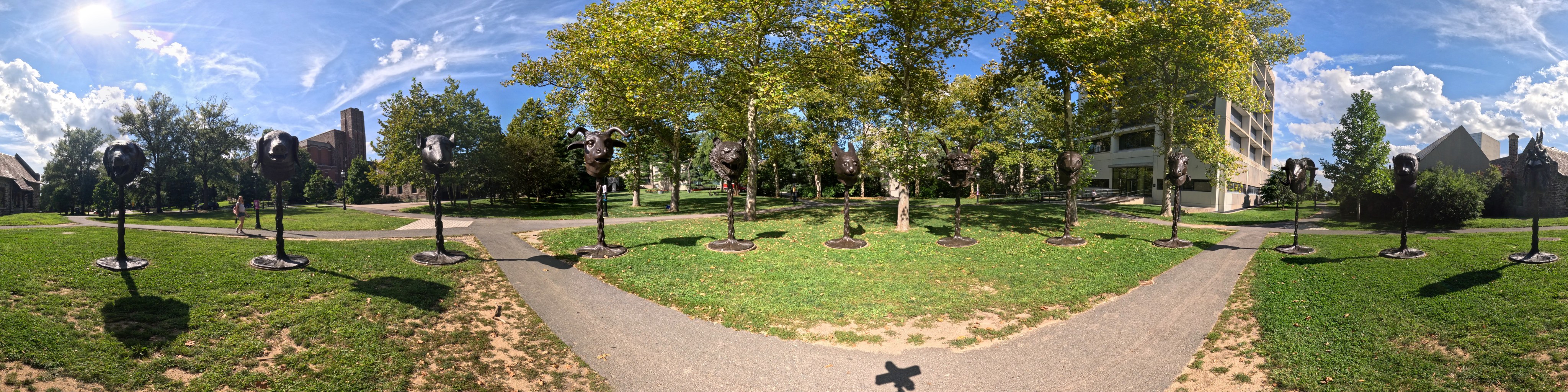
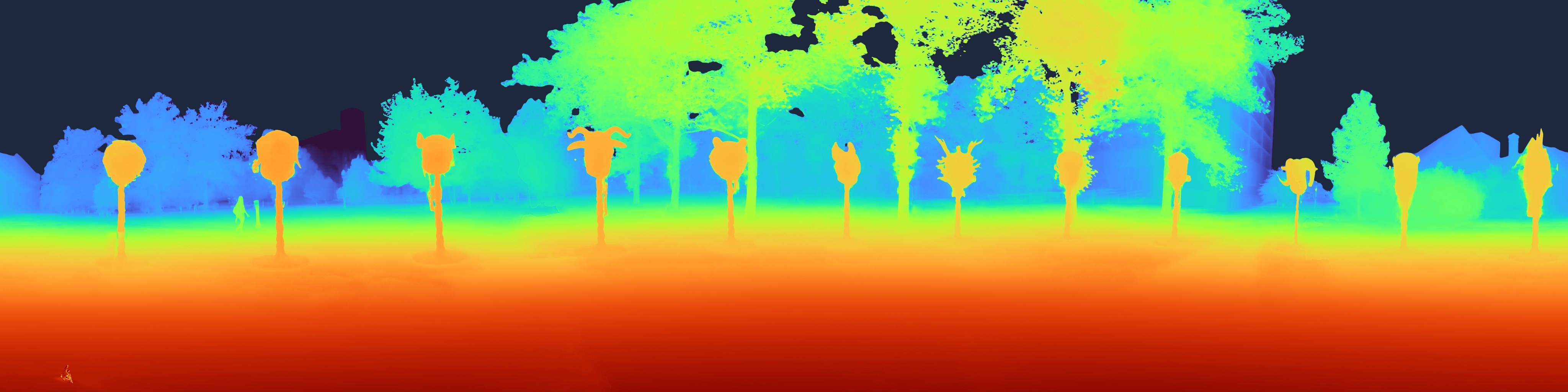
Alia has multiple sensors in one housing, angled to cover the full sphere. Every sensor fires at the same instant and our software combines them into one 360° panorama with depth for every pixel. Rigs built from separate cameras have to be synchronized, and they drift. Below, both outputs from the same capture.

DRAG
Fig. 03.1 — 360° RGB, single shot
DRAG
Fig. 03.2 — Metric depth, every pixel

The same instant, two ways. Color at 16K, metric depth at every pixel, across the full sphere.

Single-shot 360° stereo with depth
The whole sphere and its 3D geometry, from one camera position. The optical design was published at CVPR.
32+ patents
The optics are protected by more than 32 patents.
( 04 )Scale and Access

Capacity and access, already built.

20,000 hrs
per month — annotation capacity
Hundreds
of venues in our capture network

Getting a capture team into a working pharmacy, an auto plant, or a hospital ward takes agreements, training, and compliance approvals. We have already done that.

Examples of where we capture

Grocery
Pharmacy Retail
Hardware Stores
Fashion Retail
Drycleaning & Garment Services
QSR & Restaurant Kitchens
Precision Manufacturing
Auto Parts Manufacturing
Industrial Remanufacturing
Warehousing & Materials Handling
Healthcare (Clinical)
Senior & Home Care
( 05 )Research

We publish what we learn.

We test our capture and annotation methods on public models and publish the results. Four papers so far, alongside our granted patents and the earlier computer vision work our team brought to the company.

66.6%
error reduction
Cosmos-Reason2-2B · PRISM
2.19×
improvement
GR00T N1.6 · SABER
6 / 7
metrics won
Video world models · RetailSMV

Measured on public foundation and robot models. Published, with reproducible results.

( 06 )Frequently Asked

Common questions.

What does DreamVu do?
We capture real work in real places, and deliver it as training data, simulation environments, and 3D objects for robot foundation models and world models. We design the capture, run it, annotate it, and deliver it in the format you train on.
What can I buy?
Either. We license from datasets and object libraries we already hold, and we run capture programs for what does not exist yet. Tell us what your model needs to learn and which environments it needs to learn from, and we will tell you which applies.
How is your data different?
Our camera, Alia, records the whole scene as a single-shot 360° stereo panorama with depth, protected by more than 32 patents. We synchronize it with a head-mounted camera, so you get the worker’s point of view and the full 3D room around them. Conventional setups give you flat video from one fixed angle.
Do you sell cameras?
No. The camera is how we capture. The data is what we sell.
Who is this for?
Teams training robot foundation models, vision-language-action models, vision-language models, and world models. Anyone whose system has to understand or act in the physical world.

Tell us what your model needs to learn.

Capture programs, research collaboration, and dataset partnerships.

Talk to us